For more than a century, Hatton Garden has been the place Londoners go to have something precious made. Its doorways hide workshops, setters, cutters and dealers whose trades have been passed down for generations. Commissioning a piece here can be one of the great experiences of a lifetime, if you know how it works.
A street made for jewellery
The district takes its name from Sir Christopher Hatton, an adviser to Elizabeth I, who in 1576 was granted part of the Ely Palace estate, then open fields outside the city walls. Its meadows and orchards became known as Hatton's Garden, and by the mid-seventeenth century Hatton Street had been laid out, with goldsmiths and watchmakers working from their homes.
The jewellery trade took hold in the nineteenth century. As the London Museum records, Hatton Garden's directories listed eleven jewellery, watch and clock businesses in 1807, and 264 a century later, including 78 diamond firms. When the great diamond discoveries of southern Africa transformed the trade, much of it was conducted from here: at its peak, as much as 90 percent of the world's diamond supply was marketed through the Garden.
How a commission works
- The first conversation. A private consultation to talk about the person, the occasion and the feeling the piece should carry. Bring photographs of anything you love, jewellery or not.
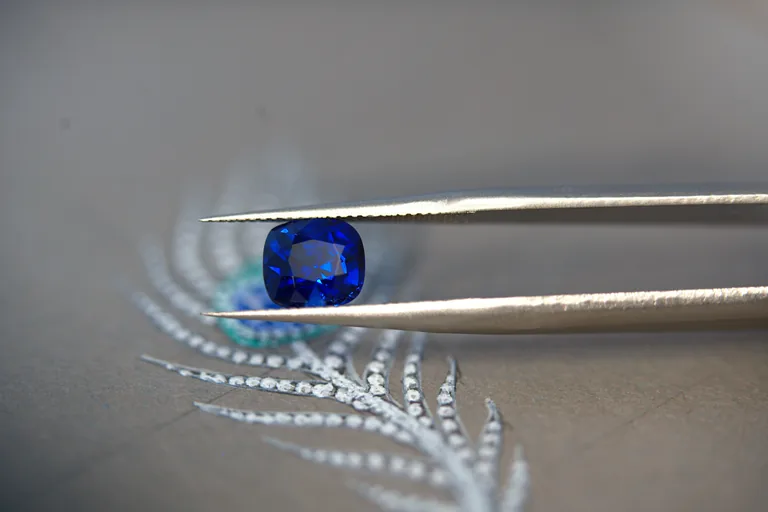
- The stone. We source and present stones to view side by side, each with its laboratory report, and explain what separates them.
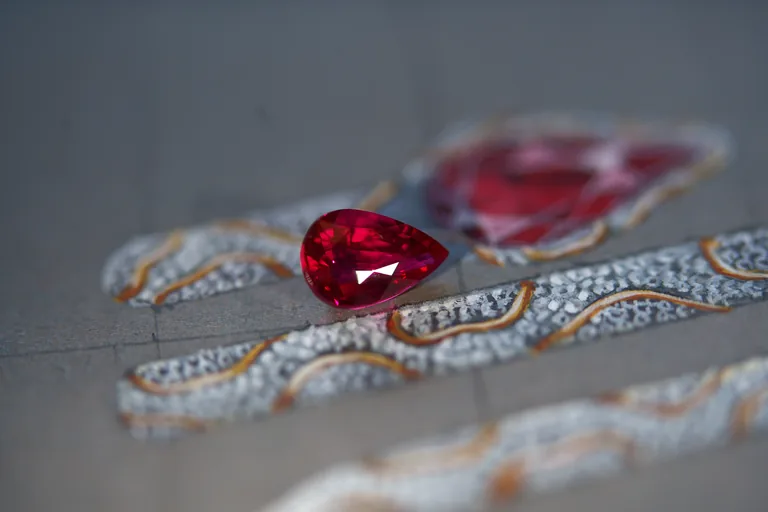
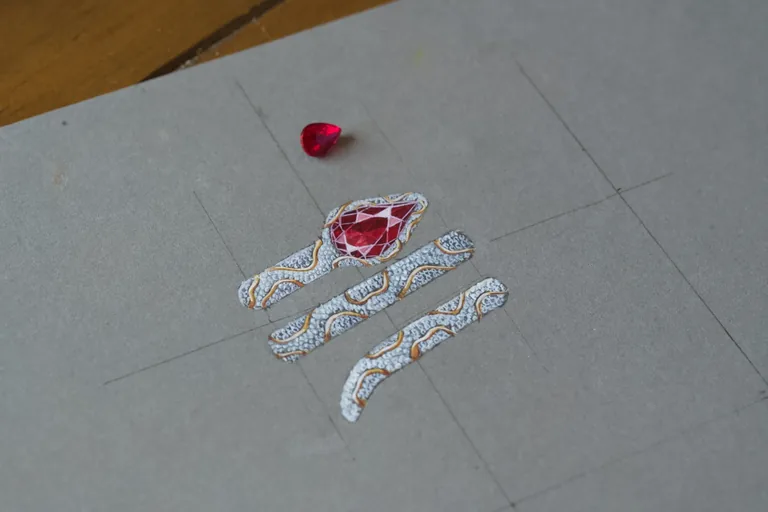
- The painting. Our Creative Director paints the design in gouache, around the exact proportions of the chosen stone.
- The engineering. The painting becomes a precise 3D model, so every claw, gallery and band taper can be reviewed from every angle before any metal is cast.
- The making. Master craftsmen cast, finish and set the piece. If a casting does not meet our standard, it is remade.
- Hallmarking and delivery. The piece is hallmarked by an assay office, valued for insurance, and presented in person or by fully insured delivery.
What to bring to your first appointment
- A budget range. It is the most useful thing you can share, and it lets us show you the right stones from the outset.
- A ring size, if you can discreetly find one. Our ring size guide explains how.
- Inspiration. Screenshots, heirlooms, architecture, a painting: anything that captures the feeling.
- A date. A bespoke piece can take up to six weeks from approved design to delivery, so tell us early if there is a proposal or anniversary in mind.
Questions worth asking any jeweller
- Which laboratory has graded the stone, and can I see the report?
- Is the piece made to order, or adapted from an existing mould?
- Will it be hallmarked in the UK?
- Will I see the design, and approve it, before it is made?
Visiting the atelier
Our atelier is a private suite at 34–35 Hatton Garden, open by appointment so that every visit is unhurried and confidential. Read more about the house and our bespoke service, or book a private consultation and begin your own commission.
