Ask a gem dealer about the finest emeralds in the world and the conversation will turn, sooner or later, to Muzo. Ask about emerald treatment and you will often meet a pause. Both deserve a clear answer, because understanding them is the surest way to buy an emerald you will love for a lifetime.
Muzo: the benchmark for green
The Muzo emerald district lies in the department of Boyacá, in the Colombian Andes, and its mines have been worked for hundreds of years. Its finest stones are celebrated for a warm, saturated green and a soft, almost velvety glow. Collectors and the great jewellery houses have long treated Muzo as the reference against which other emeralds are measured.
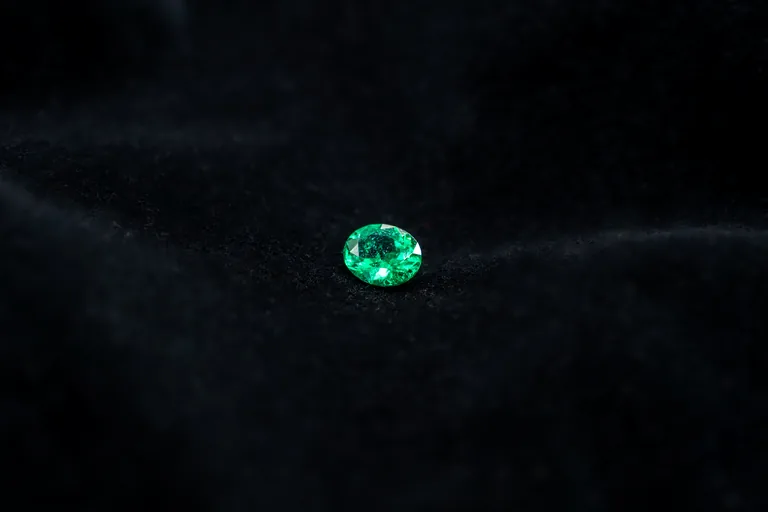
That reputation commands a premium, which is precisely why the origin should always be confirmed by a respected gemmological laboratory rather than taken on trust.
Why almost every emerald has inclusions
Emerald grows in turbulent geological conditions, and nearly every crystal carries a record of that growth: tiny fractures, fluid pockets and mineral crystals, which the French call the jardin, or garden. A completely clean emerald of any size is exceptionally rare. A fine emerald is judged not by the absence of inclusions but by how little they interfere with its colour and life.
Oil, resin and why the trade accepts it
Since ancient times, the clarity of emeralds has been improved by filling the fine surface-reaching fissures with a colourless substance. Filling lets light travel through the stone more freely, so fractures become far less visible. Research on emerald clarity grading describes the materials used over the years: natural oils such as cedarwood oil, which was once the norm, and today mainly mineral oil and liquid or hardened artificial resins.
Because it is so widespread and long-established, filling is accepted by the trade, provided it is disclosed. What matters is how much, and with what.
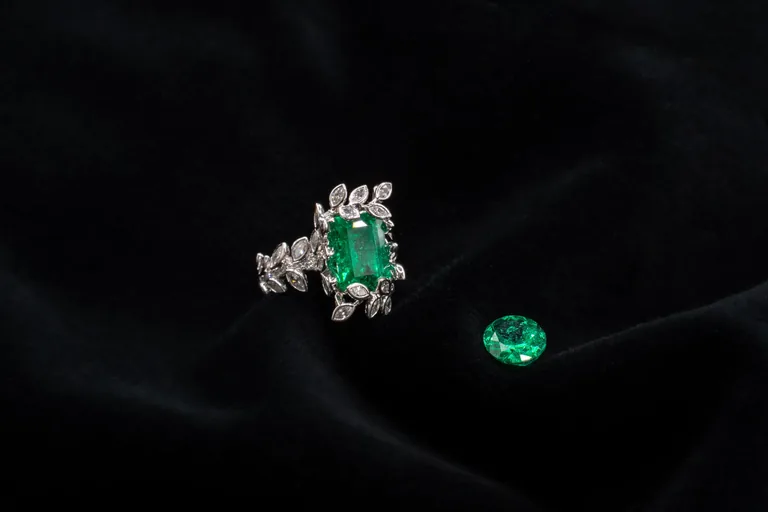
Reading the report: none, minor, moderate, significant
Leading laboratories grade the degree of clarity enhancement on a simple scale. The wording varies slightly between labs, but it broadly runs:
- None. No indications of clarity enhancement. Exceptionally rare and valued accordingly.
- Insignificant or minor. Only traces of filler in a few small fissures. This is the category most collectors aim for.
- Moderate. Filler is present in a number of fissures and is improving the stone's appearance noticeably.
- Significant. The stone relies heavily on its filler for its clarity. Priced well below a comparable minor stone, and rightly so.
A good report will also say whether the filler is an oil or a resin. Traditional oil can be removed and refreshed by a specialist. Some hardened resins are more stable, but are more difficult to remove later.
How to care for an emerald
An emerald asks for a little more care than a diamond. Clean it with lukewarm water and a soft brush, and never in an ultrasonic or steam cleaner, which can draw out the filler and make old fractures visible again. Remove the ring for heavy work, and have the setting checked each year. If an emerald does lose some of its oil over the decades, a specialist can usually restore it.

Our approach
We source emeralds as investment pieces, which means a recognised laboratory report on every significant stone, with origin and the degree of enhancement stated plainly. We favour stones graded none to minor, and we explain the report line by line before a client commits. You can see the result in pieces such as our pear-cut emerald and diamond halo bracelet.
If you are searching for an emerald of this calibre, we would be glad to show you stones privately at our Hatton Garden atelier. Book a consultation, or read more about how a bespoke commission works.
