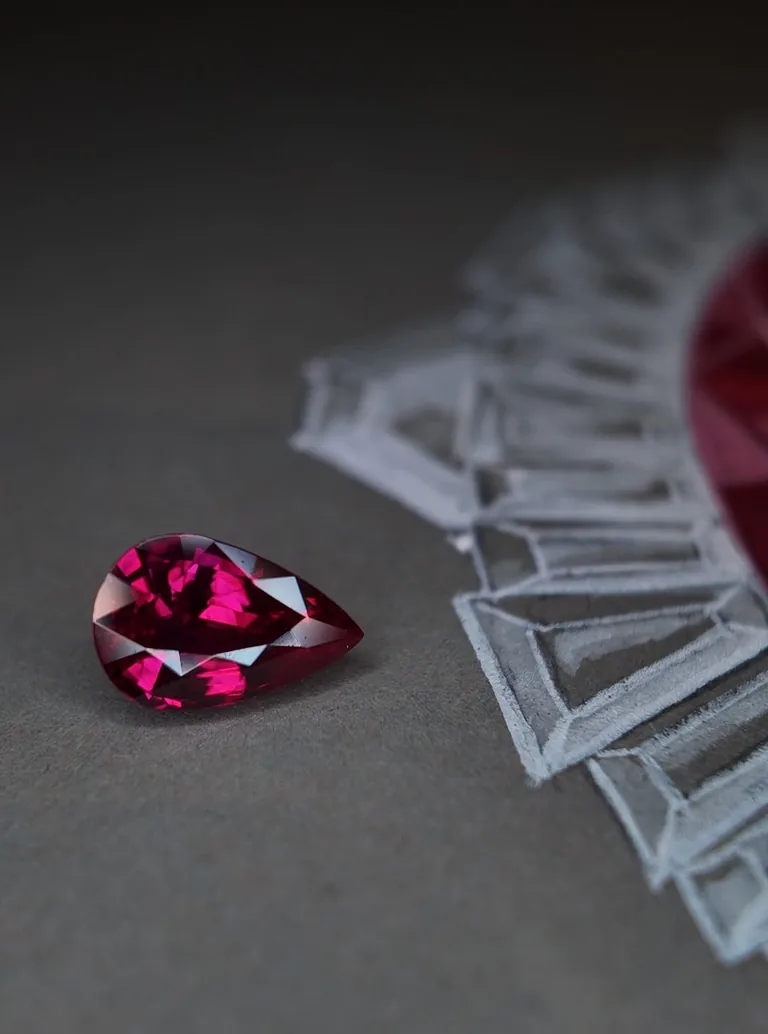
Few phrases in the gem trade carry as much weight as "pigeon blood". Whispered across dealers' tables from Bangkok to Geneva, it signals the rarest red a ruby can show. Yet for a term so often used, it is surprisingly often misunderstood. Here is what it truly means, who decides, and why it matters when you commission a ruby piece.
A colour with a history
The expression began in Burma. Traders in the Mogok valley, the most celebrated ruby source in history, used it to describe their very finest stones: a deep, pure red with a glow that seemed to come from within. For generations it was a matter of a dealer's eye and reputation rather than any written rule, which is exactly why it became so easy to stretch.
As rubies from Thailand, Mozambique and elsewhere entered the market, and as heat treatment became routine, "pigeon blood" began appearing on stones that bore little resemblance to the Mogok originals. The phrase was in danger of meaning nothing at all.
Who decides: the Swiss laboratories
In 2015, the two leading Swiss gemmological laboratories, Gübelin Gem Lab and SSEF, agreed to harmonise their definitions and testing procedures for "pigeon blood red". Today, when a serious collector speaks of a pigeon-blood ruby, they mean a stone carrying that designation on a report from one of these laboratories, or from a lab of comparable standing.
Under the Gübelin definition, a ruby must meet every one of the following conditions:
- Colour. An intense, saturated and homogeneous red, measured against reference masterstones. A slight purplish tint is acceptable; blue or brown undertones are not.
- Fluorescence. Strong red fluorescence under ultraviolet light. This comes from a high chromium and low iron content, and it produces the ruby's famous inner glow.
- No treatment. Any treatment, including heating or fissure filling, disqualifies the stone outright.
- Clarity. The ruby should be relatively free of eye-visible or dark inclusions, with vivid internal reflections across the face.
Origin is not strictly part of the definition, and size plays no part at all. In practice, however, the fluorescence requirement means that most qualifying stones are Burmese: rubies from many other deposits carry too much iron, which quenches the glow.
Why the glow matters
Iron is the quiet enemy of a great ruby. Stones that are rich in it can look handsome in a dealer's light box, but they turn darker and more sombre in everyday light. A low-iron Burmese ruby behaves differently. Its chromium fluoresces in daylight, so the stone appears to light itself from within. It is the difference between a red that sits on the surface and a red that burns.
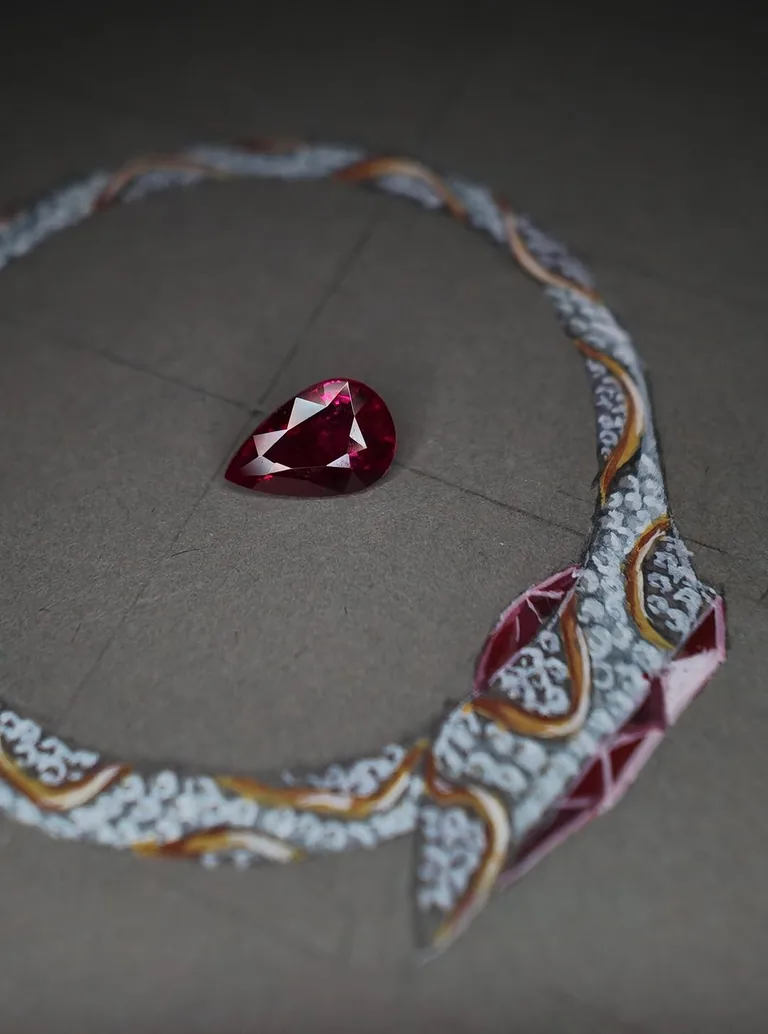
This is also why we always view rubies in natural light before committing to them. A stone that only performs under a spotlight will not reward its wearer across a lifetime.
How to buy one well
If you are considering a pigeon-blood ruby, these are the questions worth asking:
- Which laboratory issued the report? A pigeon-blood designation from Gübelin or SSEF carries a very different weight from an unverified description in a sales listing.
- Is the stone unheated? The report will say so explicitly. "No indications of heating" is what you want to see.
- What is the origin opinion? Burma (Myanmar) remains the benchmark, and the laboratory's origin opinion will appear on the report.
- How does it look away from the light box? Ask to see it by a window, and under warm indoor light.
Be wary of the phrase used loosely. A ruby described as "pigeon blood" without a report from a recognised laboratory should be judged as an ordinary ruby until proven otherwise.
The Yadanar Thaing
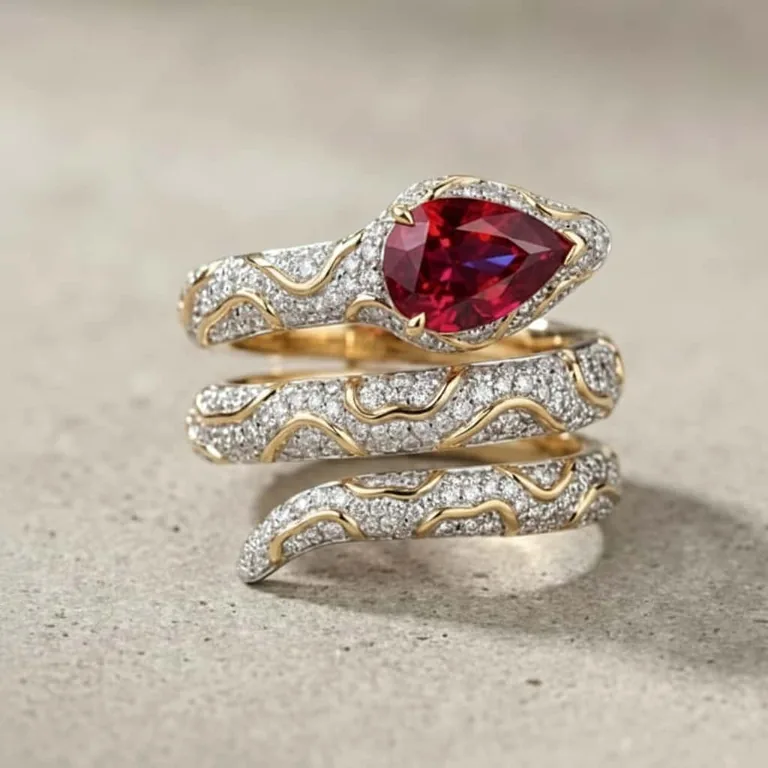
Our own Yadanar Thaing ring was designed entirely around its stone: a 1.52ct pigeon-blood Burmese ruby. Rather than placing it in a conventional setting, the serpent's head was engineered to cradle the pear shape, with claws that hold it from above and a pavé body that coils around the finger. The red sits at the very top, exactly where the light can reach it.
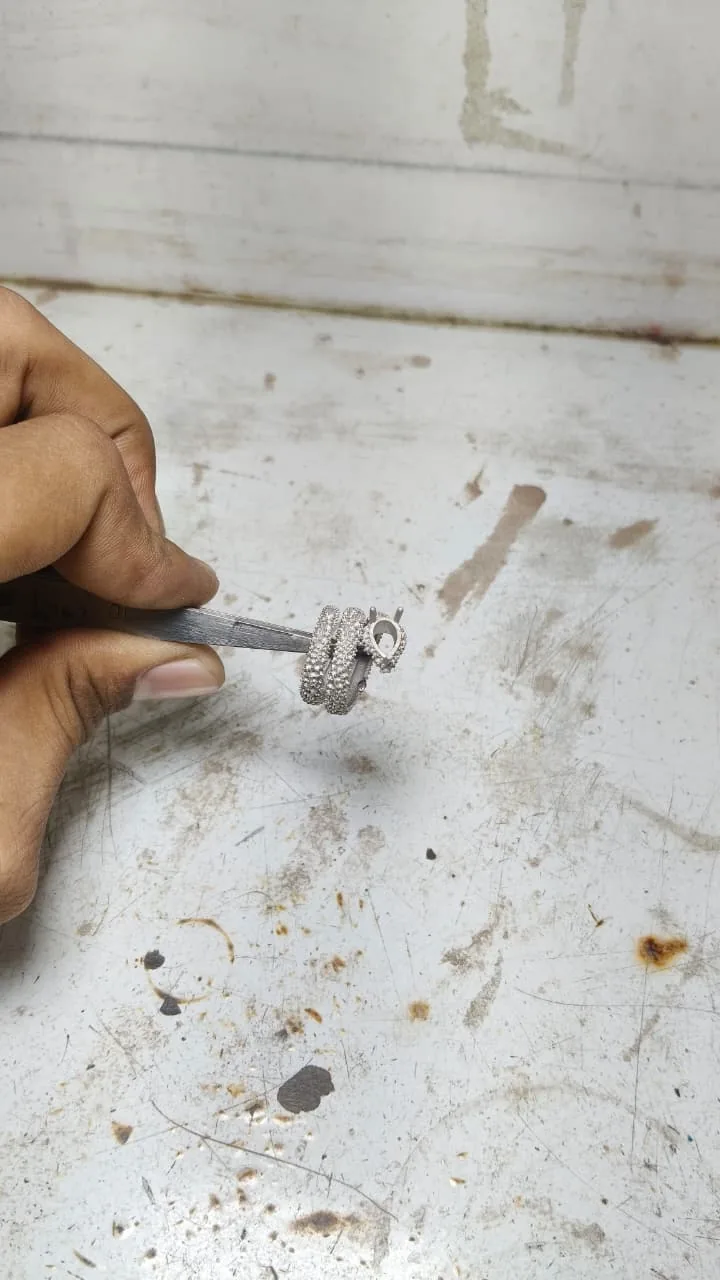
Every one of our bespoke commissions begins the same way: with the stone first, and the design painted around it. If you would like to view rubies of this calibre, we can arrange a private consultation at our Hatton Garden atelier.
